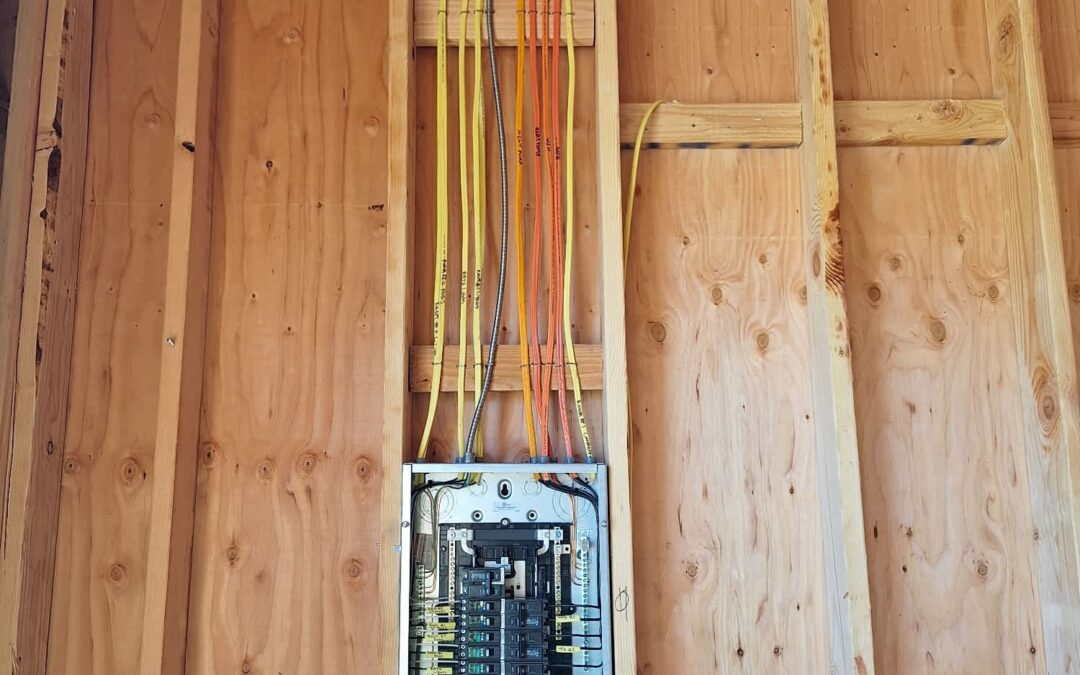
A tripped circuit breaker is one of the most common electrical issues you’ll face as a homeowner. When it happens, the power suddenly cuts out to part of your home, leaving you in the dark or shutting down appliances mid-use. A circuit breaker trips when it detects an unsafe electrical condition like an overload, short circuit, or ground fault, and it shuts off power to protect your home from fire or electrical damage.
Understanding why your breaker tripped and how to fix it can save you time and money. Most tripped breakers are easy to reset on your own, but some situations point to bigger problems that need professional help.
This guide will walk you through everything you need to know about tripped breakers. Here’s what it covers:
- Understanding why circuit breakers trip
- Identifying common signs of a tripped circuit issue
- Steps to safely reset a tripped breaker
- Recognizing when breaker problems signal larger electrical concerns
- How professional electricians address breaker issues
Keep reading to learn what causes an electrical panel tripped breaker, how to recognize serious warning signs, and when you need a licensed electrician instead of a simple reset.
Understanding why circuit breakers trip
Circuit breakers trip when they detect unsafe electrical conditions in your home’s wiring. The three main causes are overloaded circuits from using too much power, short circuits where wires touch incorrectly, and ground faults where electricity escapes its intended path.
Overloaded circuits from high energy usage
An overloaded circuit happens when you draw more electricity than the breaker is designed to handle. Each circuit breaker has a specific amperage rating, usually 15 or 20 amps for standard household circuits.
When you plug in too many devices or run high-energy appliances on the same circuit, the combined power demand exceeds this limit. The breaker detects this excess current and trips to prevent the wires from overheating.
Common circuit breaker overload signs include:
- Breaker that trips when you use multiple appliances at once
- Dimming lights when you turn on certain devices
- Warm or discolored outlets
- Burning smell near switches or outlets
Space heaters, hair dryers, and window air conditioners are frequent culprits because they pull significant power. If you notice your breaker trips every time you use a specific combination of devices, you’re likely overloading that circuit. The fix usually involves redistributing your appliances across different circuits or upgrading to a higher-rated breaker if your wiring supports it.
Short circuits and wiring faults
A short circuit occurs when a hot wire touches a neutral wire or another hot wire directly. This creates a path of extremely low resistance, causing a massive surge of current that trips the breaker instantly.
Short circuits are more serious than overloads because they can generate dangerous heat and sparks. They often result from damaged wire insulation, loose connections, or faulty appliances. You might hear a popping sound or see scorch marks near outlets when a short circuit happens.
Frequent breaker trip causes related to wiring include:
- Worn or damaged wire insulation exposing bare conductors
- Loose terminal connections in outlets or switches
- Pests chewing through electrical wires
- Water infiltration in junction boxes or outlets
If your breaker trips immediately when you reset it, a short circuit is likely the problem. This requires professional inspection since the fault could be anywhere along the circuit. Never keep resetting a breaker that trips right away, as this indicates a potentially dangerous condition.
Ground faults and safety protection mechanisms
Ground faults happen when electricity flows through an unintended path, often through water or a person’s body. This occurs when a hot wire contacts a ground wire, metal box, or wet surface.
Ground Fault Circuit Interrupter (GFCI) breakers are specifically designed to detect these faults. According to the U.S. Consumer Product Safety Commission, GFCI devices shut down electric power almost instantly whenever a consumer is at risk of injury from electricity, and broader adoption of these devices in homes could prevent a significant share of annual electrocution deaths. Standard breakers may also trip from ground faults, though they’re less sensitive.
Bathrooms, kitchens, garages, and outdoor outlets require GFCI protection because moisture increases the risk of ground faults. If your GFCI breaker keeps tripping, check for water near outlets or appliances with damaged power cords. A ground fault can also indicate failing insulation in old wiring or moisture inside electrical boxes.
Identifying common signs of a tripped circuit issue
A tripped breaker shows distinct warning signs that help you pinpoint the problem quickly. These indicators range from obvious power loss to physical changes in the breaker switch itself.
Sudden loss of power in specific areas of the home
When a circuit breaker trips, you’ll notice that power cuts out in certain rooms or areas while the rest of your home stays lit. This happens because each breaker controls a specific circuit that powers a group of outlets or fixtures.
The power loss is immediate and complete in the affected area. All lights, outlets, and appliances connected to that circuit stop working at once.
You might find that your living room has no power while your kitchen works fine. Or you may lose power to all the outlets in your bedroom but still have working lights. This pattern tells you which breaker has tripped based on what stopped working.
Check which areas lost power to narrow down the problem breaker. Most electrical panels have labels that show which breaker controls each room or circuit.
Breaker switch stuck in the middle position
A tripped breaker moves to a middle position between ON and OFF. This is the clearest physical sign that a breaker has tripped.
The switch won’t sit flush with the other breakers in the ON position. Instead, it sticks out slightly or sits in a neutral spot. Some breakers show a red or orange indicator when tripped.
You need to look at your electrical panel to spot this. The tripped breaker stands out from the others because it’s not aligned with the rest of the switches in your panel.
Repeated tripping after resetting the breaker
When you reset a breaker and it trips again right away, this signals a serious problem. The breaker may trip immediately when you flip it back on, or it might stay on for a few minutes before tripping again.
Repeated tripping means the breaker detected a fault it needs to protect against. This could be an overloaded circuit, a short circuit, or a ground fault. The breaker does its job by cutting power to prevent damage or fire.
Don’t keep resetting a breaker that trips multiple times. Each reset without fixing the underlying cause puts strain on your electrical system and creates safety risks.
Steps to safely reset a tripped breaker
Resetting a breaker requires turning off all connected devices first, moving the switch completely to the off position, and then monitoring your system after restoring power. These steps help prevent electrical hazards and identify if the problem will happen again.
Turning off connected appliances before resetting
You need to unplug or turn off all appliances and devices connected to the affected circuit before you touch the breaker. This step prevents a sudden power surge when you restore electricity.
Walk through the rooms that lost power and disconnect items like lamps, televisions, computers, and kitchen appliances. If you skip this step, turning the breaker back on could immediately overload the circuit again or damage your electronics.
Pay special attention to high-power devices like space heaters, hair dryers, or microwave ovens. These items often draw significant electricity and may have caused the original trip. You can plug them back in one at a time after you finish the reset process.
Fully switching the breaker to the off position first
Find your electrical panel and locate the breaker that moved to the middle or off position. The tripped breaker will look different from the others because it won’t be fully in the on position.
Push the breaker switch all the way to the off position until you hear or feel a click. This step is essential because the breaker needs to reset its internal mechanism completely.
After you move it to off, wait about 10 to 15 seconds. Then push the switch firmly to the on position. You should feel resistance and hear a distinct click when it locks into place.
Restoring power and monitoring for repeat issues
Check if power returned to the affected area by testing a light switch or outlet in that circuit. If the breaker stays on, you can start plugging your appliances back in one at a time.
Wait a few minutes between connecting each device. This helps you identify which appliance might be causing problems if the breaker trips again.
If the breaker trips immediately when you reset it or keeps tripping repeatedly, stop trying to reset it. This usually means you have a serious electrical problem like a short circuit or damaged wiring. You need to contact a licensed electrician to inspect your system and make repairs.
Recognizing when breaker problems signal larger electrical concerns
A breaker that trips once in a while is normal, but repeated trips or physical signs of damage point to serious electrical issues. Burning smells, warm breakers, and frequent trips on circuits with minimal use indicate problems that go beyond a simple overload.
Frequent trips without heavy appliance use
When your breaker keeps tripping on circuits that aren’t running major appliances, something is wrong with your electrical system. A bedroom circuit that trips while you’re only using a lamp or phone charger signals a wiring fault or a failing breaker.
This pattern means the problem isn’t about overloading. You might have damaged wires inside your walls, loose connections at outlets, or a breaker that has worn out from age. Ground faults can also cause this issue when electrical current finds an unintended path.
If resetting the breaker becomes a weekly or daily task, the underlying issue is getting worse. Each trip puts stress on your electrical components and increases fire risk. Don’t keep resetting a breaker that trips without an obvious cause like running a space heater and microwave at the same time.
Burning smells or signs of electrical damage
A burning smell near your electrical panel requires immediate attention. This odor means wires or components are overheating, which can start a fire inside your walls.
According to the U.S. Fire Administration, an estimated 24,000 residential electrical fires are reported annually in the U.S., with overloaded circuits and extension cords among the leading contributing factors. Treating burning smells and warm breakers as emergencies rather than nuisances is the most direct way to stay out of those statistics.
Check your breakers for these warning signs:
- Warm or hot breaker switches when you touch them
- Black marks or discoloration around breakers or the panel
- Melted plastic on breaker handles
- Buzzing or crackling sounds from the panel
- Rust or corrosion inside the panel box
Any of these signs means electrical current is arcing or connections have failed. The heat buildup damages insulation and metal components. Turn off the main breaker and call an electrician right away if you notice these problems.
Outdated panels unable to handle modern loads
Older electrical panels with 60-amp or 100-amp service weren’t built for today’s homes. Modern houses use more power for air conditioning, electric vehicles, computers, and kitchen appliances than homes did 30 or 40 years ago.
Your panel might be outdated if you experience dimming lights when the AC starts, breakers that trip when you run normal appliances together, or a panel that feels warm to the touch. Panels installed before 1990 often lack the capacity for current electrical demands.
Some older panel brands like Federal Pacific and Zinsco have known safety issues. Their breakers may fail to trip during an overload, which removes your protection against electrical fires. A licensed electrician can assess whether your panel needs replacement based on its age, capacity, and condition.
How professional electricians address breaker issues
Licensed electricians use systematic methods to diagnose why breakers trip and implement lasting solutions. They inspect electrical systems thoroughly, upgrade outdated equipment when needed, and balance power distribution across circuits.
Inspecting wiring and identifying fault sources
Professional electricians start by examining the entire circuit connected to the tripped breaker. They use specialized testing equipment like multimeters and circuit analyzers to measure voltage, current flow, and resistance throughout your electrical system.
Your electrician will check for loose connections at the breaker panel, outlets, and junction boxes. These loose connections create resistance that generates heat and can cause breakers to trip. They also look for signs of damaged insulation, exposed wires, or burnt connections that indicate serious safety hazards.
Electricians test for short circuits by measuring resistance between the hot and neutral wires. They inspect individual appliances and devices on the circuit to find faulty equipment drawing excessive current. Ground fault issues are identified using specialized testers that detect current leakage.
During electrical panel troubleshooting, professionals document which circuits share the same phase and identify patterns in when tripping occurs. This helps them determine if the problem stems from the breaker itself, the wiring, or connected devices.
Upgrading electrical panels for higher capacity
When your home’s power demands exceed your panel’s capacity, electricians recommend upgrading to a higher amperage system. Most older homes have 100-amp panels, while modern households typically need 200-amp service to handle current electrical loads.
Your electrician will assess your total power requirements by calculating the combined amperage of all circuits and planned additions. They obtain necessary permits and coordinate with your utility company to upgrade the main service line if needed.
The upgrade process involves installing a new panel box, transferring all existing circuits, and adding new breaker spaces for future expansion. Electricians ensure the new panel meets current electrical codes and includes arc-fault circuit interrupters (AFCIs) and ground-fault circuit interrupters (GFCIs) where required.
Panel upgrades typically take one to two days and require temporary power shutdown. Your electrician will label all circuits clearly and provide documentation of the new system configuration. A home electrical safety inspection before and after a panel upgrade confirms that no existing hazards carry over into the new installation.
Redistributing circuit loads for safer performance
Electricians balance electrical loads by moving high-power devices to dedicated circuits. This prevents any single circuit from carrying more than 80% of its rated capacity during normal use.
Your electrician will identify circuits that power multiple heavy-draw appliances and redistribute them across available breakers. Kitchen appliances, for example, should have separate circuits rather than sharing power with lighting or outlets in other rooms.
They may install a subpanel for specific equipment like air conditioners, electric water heaters, or workshop tools. Each new circuit receives appropriately sized wiring and breaker protection based on the connected load.
Load redistribution also involves separating continuous-use devices from intermittent loads. This ensures that appliances running for extended periods don’t compete with devices that cycle on and off frequently.
Conclusion
A tripped breaker is your electrical panel’s way of protecting your home. It stops the flow of electricity when something goes wrong with a circuit.
Most breaker trips happen for simple reasons. You might have too many devices on one circuit. An appliance might be faulty. Sometimes the breaker itself wears out over time.
You can fix some problems yourself by unplugging devices or moving them to different outlets. But some situations need a licensed electrician. Call a professional if you see burn marks, smell burning, or can’t find the cause of repeated trips.
Your electrical panel works hard to keep your home safe. Taking breaker trips seriously prevents bigger problems down the road. Start with basic checks, but don’t hesitate to get expert help when you need it.
The right response depends on what’s causing the trip. Pay attention to patterns and warning signs. Your safety is more important than trying to fix everything yourself.
Contact Peak Electric Group to have a licensed electrician diagnose your tripped breaker and address any underlying issues in your Portland home.
Recent Comments