When lights flicker, outlets stop working, or breakers keep tripping, your home’s electrical system is trying to tell you something is wrong. Circuit troubleshooting service helps identify and fix electrical problems before they become serious safety hazards or cause expensive damage to your home. These issues can happen at any time and often get worse if you ignore them.
Most homeowners will face electrical circuit problems at some point. You might notice warm outlets, buzzing sounds from electrical panels, or sudden power loss to certain rooms. Professional electricians use specific tools and methods to find the exact cause of these problems and fix them safely.
Understanding when to call for help and what to expect from a circuit troubleshooting service can save you time, money, and stress. Here’s what this guide covers:
- What circuit troubleshooting means in electrical systems
- Common electrical circuit problems homeowners face
- Warning signs you need circuit troubleshooting service
- Professional circuit troubleshooting process
- How to prevent recurring circuit issues
Keep reading to learn how professional fault detection works, what warning signs to watch for, and how the right diagnosis protects your home from costly electrical damage.
What circuit troubleshooting means in electrical systems
Circuit troubleshooting is the process electricians use to find and fix problems in your electrical systems. This work involves testing components, tracking down faults, and restoring safe operation to circuits that aren’t working properly.
How electricians identify electrical faults step by step
Your electrician starts by gathering information about the problem. They’ll ask when the issue started and what symptoms you’ve noticed, like flickering lights or tripped breakers.
The next step involves visual inspection of your electrical system. The technician checks for obvious signs of damage like burned wires, loose connections, or worn components. They also look at your circuit breaker panel to identify any tripped breakers or blown fuses.
After the visual check, your electrician measures voltage and current at different points in the circuit. They work systematically from the power source toward the problem area. This method helps isolate exactly where the fault occurs.
Once they narrow down the location, they test individual components. The electrician checks switches, outlets, and fixtures to find the faulty part. They replace or repair the problem component and verify that your circuit works correctly.
Tools used for circuit testing and diagnosis
Your circuit testing electrician relies on a multimeter as their primary diagnostic tool. This device measures voltage, current, and resistance in your electrical circuits. It helps identify breaks in wiring, shorts, and components that aren’t working.
Voltage testers provide quick checks to confirm whether power is present. Your electrician uses these to verify that circuits are de-energized before starting repairs.
Clamp meters measure current without breaking the circuit. These tools help detect overloads and imbalanced loads in your system.
Thermal imaging cameras spot hot spots that indicate loose connections or overloaded circuits. Your electrician can find problems before they cause failures.
Importance of accurate fault detection
Accurate fault detection protects your property from electrical fires. Faulty circuits generate heat that can ignite nearby materials. Your electrical circuit diagnosis service identifies these hazards before they become dangerous.
According to the U.S. Fire Administration, an estimated 24,200 residential electrical fires were reported to U.S. fire departments in 2021, resulting in 295 deaths, 900 injuries, and more than $1.2 billion in property losses. Proper diagnosis saves you money on repairs. When your electrician finds the exact problem, they fix only what needs attention. This prevents unnecessary part replacements and reduces labor costs.
Quick fault detection minimizes downtime in your home or business. Your electrician gets your power restored faster when they use systematic troubleshooting methods. This keeps your daily operations running smoothly.
Common electrical circuit problems homeowners face
Circuit issues often start small but can signal serious electrical hazards or damage your appliances. Breaker trips, short circuits, and rooms losing power all point to different problems in your home’s electrical system that need proper diagnosis and repair.
Frequent breaker trips and overloaded circuits
Your circuit breaker trips when too much electricity flows through a circuit, which forces the breaker to shut off power as a safety measure. This happens most often when you plug too many devices into outlets on the same circuit.
Overloaded circuits are common in kitchens, home offices, and entertainment centers where multiple high-power devices run at once. A single circuit typically handles 15 to 20 amps, but running a microwave, toaster, and coffee maker simultaneously can easily exceed that limit.
Breaker tripping troubleshooting starts with unplugging devices from the affected circuit and resetting the breaker. If it trips again immediately without any load, you likely have a more serious problem. If it holds when nothing is plugged in but trips when you use certain appliances, the circuit is overloaded.
Repeated trips can damage the breaker itself and create fire risks from overheated wiring. You may need additional circuits installed or your electrical panel upgraded to handle your home’s power needs safely.
Short circuits and wiring faults
A short circuit occurs when hot wires touch neutral wires or ground wires, creating a sudden surge of electricity. This causes your breaker to trip instantly and can produce sparks, burning smells, or scorch marks around outlets.
Damaged wire insulation, loose connections, or faulty appliances typically cause short circuits. Old wiring can crack and expose bare wires that touch each other inside walls or junction boxes. Rodents chewing through wire insulation also create shorts.
These faults are dangerous because they generate heat and can start electrical fires. You might notice a burning plastic smell, discolored outlets, or buzzing sounds before the breaker trips. Never ignore these warning signs or keep resetting a breaker that keeps tripping from a suspected short circuit.
Inconsistent or partial power loss in rooms
Some outlets or lights working while others don’t usually means a problem with a specific circuit or connection. You might find half your living room has power while the other half is dead, or certain outlets work intermittently.
Loose wire connections at outlets, switches, or the electrical panel cause most partial power loss issues. These connections can loosen over time from normal use or poor initial installation. A tripped GFCI outlet can also cut power to other outlets downstream on the same circuit.
Bad circuit breakers sometimes fail to provide consistent power even when they haven’t tripped. The internal mechanism wears out and creates resistance that reduces voltage to connected outlets and fixtures.
Warning signs you need circuit troubleshooting service
Your home’s electrical system sends clear signals when circuits start to fail. Recognizing burning smells, unstable power, or appliances that suddenly stop working can help you address problems before they become dangerous.
Flickering lights or unstable power flow
Flickering lights usually mean loose connections or circuits that can’t handle your power needs. When lights dim without reason, the circuit may be struggling to distribute electricity properly.
You might notice this happens when you turn on certain appliances. The sudden power demand reveals an underlying weakness in the circuit.
Common flickering patterns include:
- Lights that dim when the refrigerator or air conditioner starts
- Random flickering in multiple rooms at once
- Brightness changes when you plug in devices
This problem rarely fixes itself. The electrical connections can worsen over time, creating heat and potentially sparking. Circuit troubleshooting can identify whether you have damaged wiring, an overloaded circuit, or a failing breaker that needs replacement.
Burning smells or warm outlets and switches
A burning smell near outlets or your electrical panel signals dangerous overheating. You should shut off power to that area immediately and contact a professional.
Warm or hot outlets indicate too much current flowing through the wiring. Normal outlets stay cool to the touch, even during use. Heat buildup can damage the insulation around wires and create fire risks.
Warning signs of overheating circuits:
- Discolored or scorched outlet covers
- Outlets that feel hot when touched
- A plastic or burning smell near switches
- Buzzing or sizzling sounds from outlets
These symptoms point to serious wiring faults or circuit overloads. The problem exists inside your walls where you can’t see it. Professional circuit troubleshooting can locate the source of heat and prevent electrical fires.
Appliances not working on specific circuits
When multiple outlets stop working in the same area, you likely have a circuit problem. A single dead outlet might be a simple fix, but several outlets on one circuit suggest a bigger issue.
Your circuit breaker might trip repeatedly when you use certain appliances. This happens when the circuit detects a problem and shuts off to protect your home.
Some circuits fail partially, providing weak or inconsistent power. Your devices might turn on but not work at full strength. This indicates damaged wiring or a breaker that can’t maintain proper voltage.
Circuit troubleshooting identifies why specific circuits fail while others work normally. The electrician will test connections, measure voltage, and check the breaker panel to find the exact cause.
Professional circuit troubleshooting process
Professionals follow a structured approach to diagnose and fix electrical problems in your system. This process includes checking your electrical panel, testing your wiring for faults, and replacing or repairing damaged parts.
Initial inspection of electrical panel and circuits
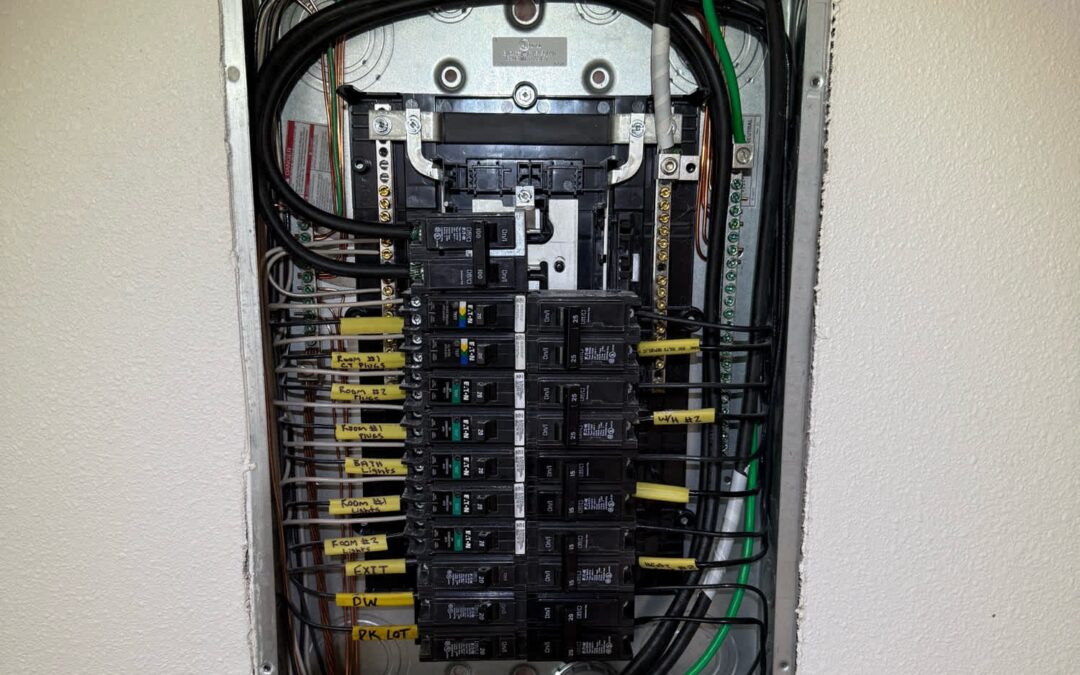
A technician begins by examining your electrical panel to check for visible problems. They look for signs of damage like burn marks, corrosion, or loose connections that could cause issues. The breakers get tested to make sure they trip at the right amperage.
Your service provider will also check the panel’s overall condition and age. Older panels may not meet current electrical codes or handle modern power demands. The technician documents which circuits control different areas of your home.
During this stage, they verify proper labeling of all circuits. They measure voltage levels at the panel to confirm your system receives the correct power supply. Any unusual heat, buzzing sounds, or burning smells get noted as potential warning signs.
Testing wiring and identifying fault locations
The technician uses specialized tools to test your electrical circuits throughout your home. Multimeters measure voltage, current, and resistance at outlets and switches. Circuit tracers help locate the exact path of wiring behind your walls.
Home wiring fault detection requires systematic testing of each circuit. The professional checks for short circuits, ground faults, and open circuits that disrupt power flow. They test GFCI outlets to ensure they provide proper protection against electrical shock.
Advanced diagnostic equipment can identify problems without removing drywall. Thermal imaging cameras detect hot spots in your wiring that indicate potential failures. The technician maps out problem areas and determines the severity of each issue.
Isolating and repairing damaged components
Once the technician locates the fault, they isolate the affected circuit by shutting off power at the breaker. This keeps everyone safe during the electrical system repair service. They remove covers from outlets, switches, or junction boxes to access the damaged wiring.
Common residential electrical repairs include replacing worn outlets, fixing loose wire connections, and installing new circuit breakers. The technician may need to run new wire if existing cables are damaged beyond repair. All work follows local electrical codes and safety standards.
After completing repairs, they test the circuit under load to confirm it works properly. The technician verifies proper voltage, checks for any remaining faults, and ensures all connections are secure. They document the repairs and provide you with information about what was fixed.
How to prevent recurring circuit issues
Preventing circuit problems requires addressing system weaknesses before they cause repeated failures. This involves updating old wiring, distributing power properly, and scheduling professional inspections.
Upgrading outdated electrical systems
Older homes often have electrical systems that can’t handle modern power demands. If your home was built before 1990, the wiring and circuit breaker panel may not meet current safety standards or capacity requirements.
Aluminum wiring was common in homes built between 1965 and 1973. According to the U.S. Consumer Product Safety Commission, homes built before 1972 and wired with aluminum are 55 times more likely to reach fire hazard conditions at outlet connections than homes wired with copper. A licensed electrician can replace aluminum wiring with copper or install special connectors to make it safer.
Federal Pacific and Zinsco panels are two brands known for failing to trip when they should. These panels can allow dangerous electrical conditions to continue unchecked. Replacing these panels costs between $1,500 and $3,000 but protects your home from electrical fires.
Many older homes have 60-amp or 100-amp service, which isn’t enough for today’s appliances and electronics. Upgrading to a 200-amp service lets you safely run multiple high-power devices without overloading circuits.
Balancing electrical loads across circuits
Overloaded circuits are the most common cause of repeated breaker trips. Each circuit has a maximum amperage rating, usually 15 or 20 amps for standard household circuits.
Common appliances and their typical amperage:
- Window air conditioner: 8-12 amps
- Microwave: 10-12 amps
- Coffee maker: 8-10 amps
- Space heater: 12-15 amps
- Hair dryer: 10-12 amps
Never plug high-power appliances into the same circuit. Space heaters and window air conditioners should have dedicated circuits. Move some devices to outlets on different circuits to spread the electrical load.
You can identify which outlets share a circuit by turning off one breaker and testing outlets with a lamp. Label your breaker panel clearly so you know which circuit controls each area of your home.
Regular electrical maintenance inspections
Professional electricians can spot problems before they cause circuit failures. Schedule a home electrical safety inspection every three to five years, or sooner if you notice warning signs.
During an inspection, an electrician checks for loose connections, damaged wiring, and signs of overheating. They test your circuit breakers to confirm they trip at the correct amperage. Loose connections create resistance, which generates heat and can damage wiring over time.
Thermal imaging cameras detect hot spots in your electrical system that aren’t visible to the naked eye. These hot spots often indicate failing connections or overloaded circuits. An electrician can tighten connections, replace worn components, and recommend circuit upgrades where needed.
If you’ve added major appliances or completed renovations, get an electrical maintenance inspection right away. These changes affect your electrical load and may require additional circuits or a service upgrade.
Conclusion
Circuit troubleshooting requires a careful approach and proper knowledge of electrical systems. You need to understand how circuits work and what tools to use for testing.
Safety should always come first when you work with electrical systems. Turn off power at the breaker before starting any work. Use the right protective equipment and follow proper procedures.
You can handle some basic electrical issues on your own if you have the right skills and tools. However, complex problems often need a professional electrician. Professional circuit troubleshooting services bring years of experience and advanced diagnostic equipment to solve problems quickly.
Regular maintenance helps prevent many circuit problems before they start. Check your electrical panel regularly and watch for warning signs like frequent breaker trips or flickering lights.
Professional help is worth the investment when you face persistent electrical issues. Experienced electricians can spot problems that might not be obvious to you. They also complete repairs safely and according to electrical codes.
Your home’s electrical system powers everything you need each day. Taking care of it through proper troubleshooting and maintenance keeps your family safe and your home running smoothly.
Contact Peak Electric Group to schedule a professional circuit troubleshooting service and get your electrical system diagnosed correctly the first time.
Recent Comments