Winter storm power outage prep works best before the first ice storm reaches Portland and Vancouver. Homeowners who wait until the wind picks up often end up scrambling for supplies and making risky choices with backup power.
In this article, you will learn why winter storms create real electrical risks in this region, how to prepare your home and backup power safely, and how to restore power without damaging equipment. You will also see what to do if a storm damages your electrical system.
Here’s what you need to know.
- Why does winter storm power outage prep matter so much in Portland and Vancouver?
- What should you check and prepare before the storm arrives?
- How do you run a generator and restore power without damaging your home?
- What should you do if a storm damages your electrical system?
Keep reading to build a safe, practical outage plan before the next winter storm arrives.
Why does winter storm power outage prep matter so much in Portland and Vancouver?
Portland and Vancouver winters rarely bring heavy snow, but they regularly bring ice, freezing rain, and strong east winds through the Columbia River Gorge. That combination is especially hard on overhead lines and the tall, mature trees that line many neighborhoods. Outages can last hours in some storms and days in others. Preparing ahead gives you control over how your household responds.
Good winter storm power outage prep covers more than flashlights and batteries. It includes a healthy electrical system, a safe backup power plan, and a clear idea of what to do when the power comes back. Each piece protects your home from a different kind of risk. The sections below explain why each one matters.
How do ice and wind knock out power across the region?
Freezing rain coats branches and lines with ice that can weigh hundreds of pounds per span. Wind then snaps those loaded limbs onto distribution lines, service drops, and transformers. A single failure can cut power to an entire street or neighborhood. Repairs slow down when crews face icy roads and dozens of damaged sites at once.
Many homeowners first notice a storm problem as flickering lights or sudden power loss in part of the house. Sometimes that is the utility, and sometimes it is damage to the service drop at your own home. Knowing the difference helps you decide whether to wait for the utility or call an electrician. Checking whether neighbors still have power is a quick first step.
What happens to your home when an outage lasts for days?
Short outages are inconvenient, but extended ones create real safety and property risks. Most heating systems, including gas furnaces, need electricity to run their blowers, igniters, and controls. Without heat, indoor temperatures drop quickly during a freeze. The list below shows what typically fails first.
- Furnaces, heat pumps, and boilers stop running, even when they burn gas or oil.
- Sump pumps shut down, which can flood basements during heavy rain or snowmelt.
- Refrigerators and freezers begin losing safe food temperatures within hours.
- Exposed plumbing in crawl spaces and exterior walls becomes vulnerable to freezing.
Medical devices, well pumps, and garage door openers add to that list in many homes. Knowing which systems your household depends on helps you plan backup power realistically. A home energy audit can also show where heat escapes fastest, which matters when the furnace is off. Better insulation and sealing buy valuable hours during a long outage.
Which electrical problems make outages more dangerous?
Existing electrical weaknesses often become emergencies during winter storms. Extra space heaters, temporary cords, and generator use add stress to systems that may already be struggling. Moisture from rain and snow raises the risk of shock around damaged equipment. The questions below cover the issues homeowners ask about most.
Can running several space heaters overload a circuit?
Yes. Multiple heaters on one circuit are a common cause of seasonal electrical overloads, especially in older homes.
Is damaged wiring more dangerous in wet weather?
Yes. Moisture around faulty wiring increases the risk of shock, arcing, and fire compared with dry conditions.
Does an overloaded circuit always trip the breaker?
Not always. Worn breakers may fail to trip, which is why warm outlets and dimming lights also deserve attention.
Are older homes at higher risk during outages?
Often, yes. Older homes tend to have limited circuits, aging panels, and connections that tolerate less stress.
Fixing known issues before winter removes these compounding risks. A loose connection or a failing breaker is far easier to repair in October than in the middle of an ice storm. Electricians also book up quickly once severe weather arrives. Early attention keeps your home ready for whatever the season brings.
What should you check and prepare before the storm arrives?
The most useful preparation happens weeks before a storm appears in the forecast. That is when you have time to inspect your electrical system, make repairs, and choose a backup power option. Rushed decisions during a storm often lead to unsafe generator hookups or overloaded cords. A calm, planned approach produces much better results.
Many homeowners fold this preparation into a fall electrical inspection. The electrician can check the panel, test protective devices, and confirm your backup power plan is safe. That single visit covers most of what winter preparation requires. The sections below outline what to focus on.
What should your pre-winter electrical checklist include?
A pre-winter checklist focuses on the parts of your system that face the most stress during storms. It also prepares you to act quickly if the power goes out. Most items take only minutes to review. The checklist below covers the essentials.
- Panel condition: Look for rust, scorch marks, buzzing, or breakers that feel warm, and schedule repairs before winter.
- Circuit labels: Confirm every breaker is labeled accurately so you can shut off or prioritize circuits quickly.
- Outdoor protection: Test outdoor GFCI outlets and confirm weatherproof covers are intact.
- Emergency supplies: Gather flashlights, lanterns, spare batteries, and battery-powered or battery-backup CO alarms.
A panel showing corrosion or heat damage should be evaluated before storm season rather than after a failure. In some cases, panel replacement is the safest fix. Reviewing panel upgrade pricing ahead of time helps you budget calmly. Battery-powered lighting is also safer than candles when the power goes out.
Which backup power option fits your household?
Backup power ranges from a small portable generator to a permanently installed standby system. The right choice depends on your essential loads, budget, and how long outages typically last where you live. Carbon monoxide safety should shape the decision from the start. A CPSC generator guide recommends choosing a portable generator with an automatic shutoff that activates when carbon monoxide levels become dangerous.
Pros of a portable generator
- Lower upfront cost and no permanent installation for the generator itself.
- Enough capacity for essentials such as a furnace blower, refrigerator, and lights.
- Can be used for other purposes, such as job sites or recreation.
- Works safely with a properly installed inlet and transfer switch.
Cons of a portable generator
- Requires manual setup and refueling during the storm.
- Must run outdoors at a safe distance, even in freezing rain.
- Limited capacity for whole-home loads like electric heat.
- Improper use creates serious carbon monoxide and backfeed risks.
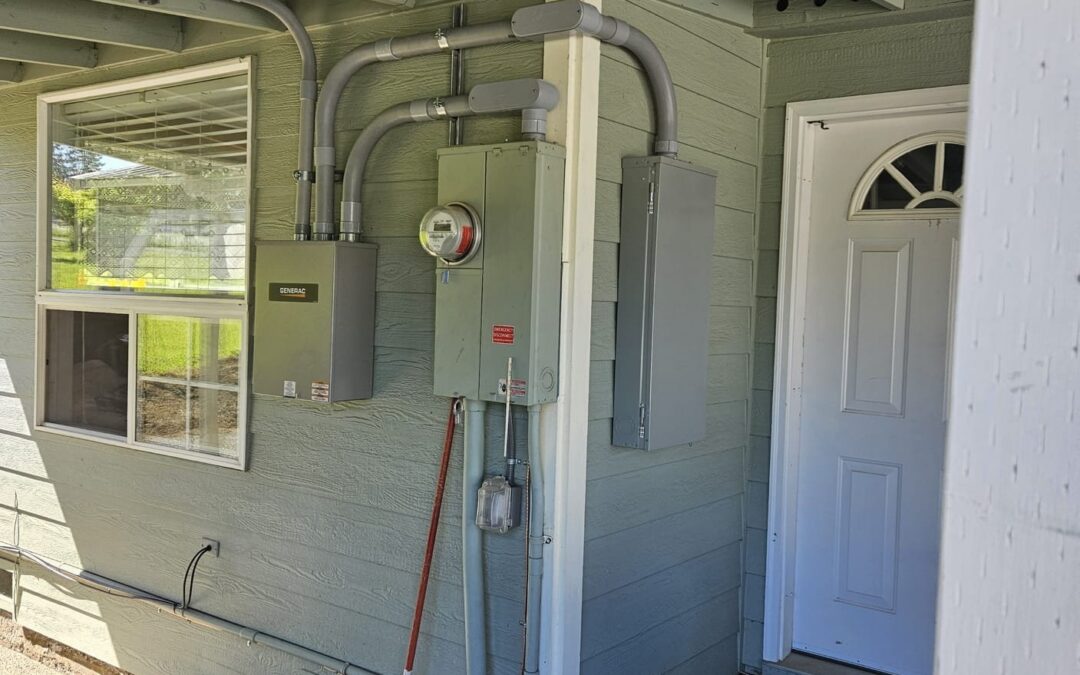
A standby system starts automatically and runs on natural gas or propane, so no one needs to go outside during a storm. It costs more upfront but delivers the most consistent protection. Our whole-house generator cost guide breaks down typical pricing for Portland and Vancouver homes. Some homes also need panel or service upgrades before a standby system can be added.
Why is a transfer switch the only safe way to connect a generator?
Connecting a generator to your home’s wiring without isolation from the utility creates a dangerous backfeed. Power can flow out through your service and energize lines that crews believe are dead. The OSHA eTool warns never to attach a generator directly to a structure’s electrical system unless a qualified electrician has installed a transfer switch. So-called suicide cords that plug into a dryer outlet or wall receptacle are never an acceptable shortcut.
A transfer switch or listed interlock disconnects the utility before the generator can power your circuits. The National Electrical Code requires transfer equipment for optional standby systems under Article 702. Installation typically requires a permit and inspection in both Oregon and Washington. A professional service call to install an inlet and transfer switch is a small cost compared with the risk it removes.
How do you run a generator and restore power without damaging your home?
Generators save lives during long outages, but they also cause deaths every winter when used improperly. Carbon monoxide poisoning, electrocution, and fire are the three main hazards. Each one is preventable with a few firm rules. Restoring utility power brings its own risks for appliances and electronics.
The sections below cover generator placement, surge protection, and load management. Following them keeps your household safe during the outage and protects equipment when service returns. Share these rules with everyone in the home before storm season. That way, anyone can act safely if you are not there.
Where is it safe to place a portable generator?
Placement is the most important generator safety decision. According to a CPSC storm warning, portable generators should run outside only, at least 20 feet from the house, and never on a porch or in a carport. The agency also advises directing exhaust away from any building and closing nearby windows and vents. The steps below help you set up correctly every time.
- Choose a spot at least 20 feet from doors, windows, vents, and garage openings before winter arrives.
- Point the exhaust away from your home and your neighbors’ homes.
- Use a generator canopy or cover designed for wet weather rather than moving the unit closer to shelter.
- Turn the generator off and let it cool before refueling, and store fuel away from living areas.
Never run a generator in a garage, basement, or shed, even with the doors open. Carbon monoxide can reach deadly levels in minutes and drift into living spaces. Install CO alarms on every level of the home and outside sleeping areas. Test them before storm season and again during any outage.
How can you protect electronics when the power comes back?
The moment utility power returns can be rough on your equipment. Voltage may spike or fluctuate as the grid stabilizes, and many appliances restart at once. Sensitive electronics, HVAC controls, and appliance circuit boards are most vulnerable. The scenarios below show what to expect and how to respond.
- Lights flicker after restoration: Wait several minutes before turning major equipment back on, since voltage may still be settling.
- Everything restarts at once: Turn appliances back on gradually to avoid a large surge of demand on your panel.
- A breaker trips on restart: Identify the circuit and review common tripped breakers causes before resetting it again.
- A device smells hot or buzzes: Unplug it immediately and have the circuit evaluated before using it again.
Whole-home surge protection installed at the panel protects every circuit, including hardwired equipment. Point-of-use surge strips add a second layer for computers and entertainment systems. The NEC now requires surge protection for new and replaced dwelling services, reflecting how common surge damage has become. Unplugging sensitive electronics during the outage adds simple, free protection.
How should you manage limited power during a long outage?
Backup power is almost always limited, so prioritizing loads matters. Start with safety and health needs such as medical equipment, sump pumps, and the furnace blower. Refrigeration comes next, followed by a few lights and phone charging. Running everything at once can overload the generator and the circuits it feeds.
Your circuit labels and the principles of load balancing help you rotate essential loads rather than stacking them. Space heaters on generator power should never be left unattended or placed near combustibles. Heavy-duty, outdoor-rated cords should run directly to each appliance without daisy-chaining. If cords or plugs feel hot, reduce the load immediately.
What should you do if a storm damages your electrical system?
Storms can damage your service drop, meter base, outdoor equipment, and wiring inside the home. Some damage is obvious, such as a torn service line or a scorched outlet. Other damage is hidden and appears only after power returns. Knowing how to respond protects your family and the crews working in your neighborhood.
The first priority is always personal safety. Stay away from downed lines and standing water near electrical equipment. Once the area is safe, document the damage and call the right people. The sections below explain what to do.
How should you respond to downed power lines?
Downed lines are among the most dangerous hazards after a winter storm. An OSHA fact sheet warns that downed wires can energize fences, water pipes, bushes, trees, and buildings, and that improper generator connections create hazardous backfeed. A line that looks dead can still carry lethal voltage. The checklist below covers what to do.
- Assume it is live: Treat every downed line as energized, no matter how it looks or sounds.
- Keep your distance: Stay well away from the line and anything it touches, including fences and puddles.
- Report it: Call your utility and 911 immediately rather than trying to move the line.
- Warn others: Keep family members, pets, and neighbors away until crews arrive.
Never drive over a downed line or try to move branches that touch one. If a line falls on your vehicle, stay inside unless there is a fire and wait for help. Damage to your service drop or meter base is usually the utility’s responsibility up to a point. Repairs on the home side of that point require a licensed electrician and, often, an inspection before reconnection.
Which signs of storm damage need an electrician before power is restored?
Some storm damage is easy to see, while other damage hides behind walls and inside panels. Burning smells, scorch marks, sparking, or water in the panel all require professional evaluation before the affected circuits are used. Many of these hidden electrical problems surface only when power returns. Turning circuits on too soon can turn minor damage into a fire.
If you see active sparking or smoke, leave the area and call for emergency electrical service. Buzzing devices or signs of short circuits also warrant prompt attention. Breakers that will not reset may need breaker repair or replacement rather than repeated attempts. Any dead outlets that remain after service returns often point to a damaged splice or a tripped GFCI. A licensed electrician can confirm the system is safe before you rely on it again.
Which upgrades make your home more resilient for next winter?
Every storm reveals where a home’s electrical system is weakest. A properly installed generator inlet or standby system with a transfer switch is the biggest resilience upgrade for most homes. Adding GFCI outlets outdoors and in garages improves safety during wet weather. Energy-efficient lighting installation also reduces the load on backup power when it matters most.
Homes with outdated wiring may show clear signs they need rewiring before adding major backup equipment. A contractor offering full residential electrical service can plan these upgrades in the right order. Adding the work to a preventative maintenance plan keeps equipment tested and ready. Scheduling future inspections each fall catches new issues before storm season begins.
Conclusion
Winter storm power outage prep comes down to a healthy electrical system, a safe backup power plan, and clear rules for storm damage. Ice and wind make outages a regular part of Portland and Vancouver winters, and extended outages put heating, plumbing, and food at risk. Generators must run outdoors at a safe distance and connect only through a transfer switch. Restoring power gradually and using surge protection keeps equipment safe when service returns.
Downed lines should always be treated as live and reported immediately. Any sign of damage inside the home deserves a licensed electrician’s evaluation before circuits are used again. Preparing in the fall gives you time to fix weak points calmly rather than during a storm. If you are ready to prepare your Portland or Vancouver home for storm season, Peak Electric Group can schedule a professional electrical safety evaluation.
Recent Comments