
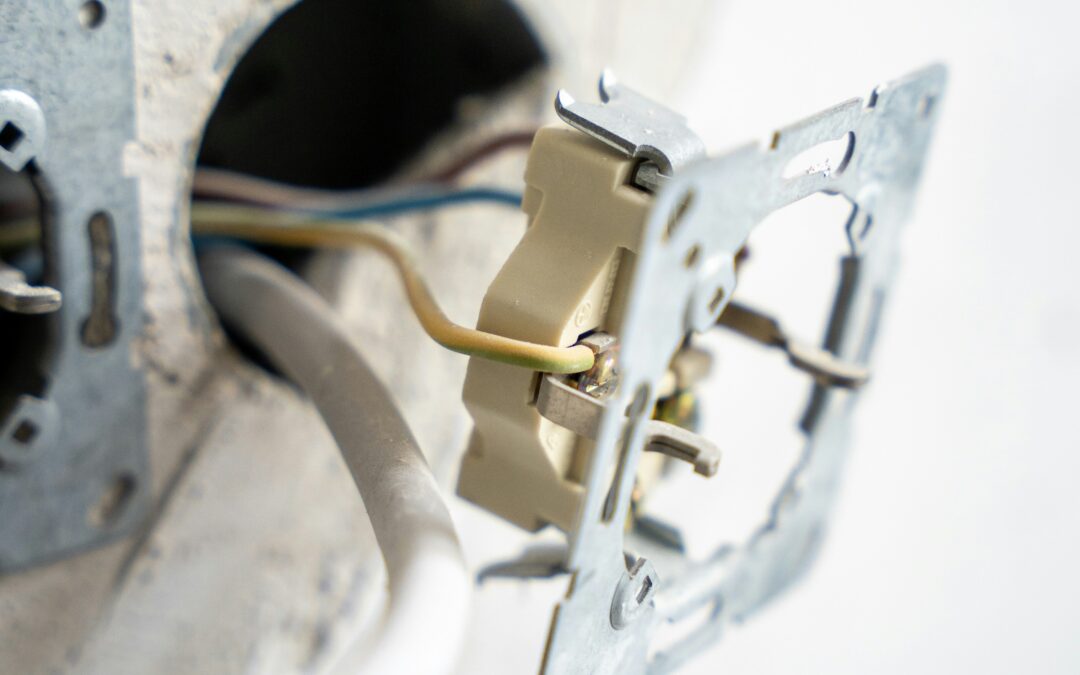
You plug in your phone charger and nothing happens. You try a lamp, same outlet, same result. A dead outlet is one of those problems that feels minor until you realize you have no idea what caused it, and no way to tell from the outside whether the fix is a two-second reset or a sign that something behind the wall needs attention.
Understanding why outlets stop working in Portland homes helps you skip the guesswork and respond correctly the first time. Some causes are things you can check yourself in under a minute. Others point to wiring conditions that need a licensed electrician before they become safety hazards.
This guide covers the full range of reasons an outlet goes dead, from the simple resets most homeowners overlook to the wiring faults that require professional diagnosis. It also explains why Portland’s older housing stock makes certain outlet failures more common here than in newer markets.
In this article, you will learn about:
- Simple causes you can check and fix yourself in minutes
- Wiring problems hiding behind a dead outlet
- Why Portland homes lose outlets more often than newer construction
- GFCI outlets and the downstream circuits they silently control
- When a dead outlet means the panel needs attention
- What a professional outlet diagnosis covers
Keep reading to find out whether your dead outlet is a quick fix or an early warning.
Simple causes you can check and fix yourself in minutes
Before you call anyone, there are a few things worth checking. A surprising number of dead outlet calls turn out to be something the homeowner could have resolved in less than a minute. Ruling these out first saves you time and money, and it gives you better information to share with an electrician if you do need one.
A tripped breaker you have not noticed yet
Every outlet in your home is connected to a circuit, and every circuit runs through a breaker in your electrical panel. When a circuit draws more current than the breaker is rated for, the breaker trips and cuts power to everything on that circuit. The outlet did not fail. The breaker protecting it did exactly what it was designed to do.
Check your panel for any breaker that is not fully in the ON position. A tripped breaker often sits in a middle position between ON and OFF rather than flipping all the way to OFF, which makes it easy to miss on a quick glance. To reset it:
- Push the breaker handle firmly to the OFF position first
- Then push it back to ON until it clicks into place
- Check the outlet to see if power has returned
If the breaker trips again immediately or within a few minutes of resetting, stop resetting it. A breaker that will not hold is telling you there is a fault on the circuit, not just a momentary overload. That situation calls for circuit troubleshooting rather than repeated resets.
A GFCI outlet tripped somewhere else on the circuit
This is the single most overlooked cause of a dead outlet in any home. A ground fault circuit interrupter outlet protects not only itself but every standard outlet wired downstream of it on the same circuit. When the GFCI trips, every downstream outlet loses power, even if those outlets are in a completely different room.
The GFCI that controls your dead outlet might be in the garage, the bathroom, or the kitchen, nowhere near the outlet that stopped working. Look for any outlet in your home with TEST and RESET buttons on its face. Press RESET firmly and check your dead outlet again.
Common GFCI locations that control downstream outlets in other rooms:
- The garage, which often feeds outlets in an adjacent hallway or mudroom
- The first bathroom outlet, which may feed outlets further down the circuit
- The kitchen, where a countertop GFCI can control outlets in a connected dining area
- An exterior outlet that shares a circuit with interior receptacles
If pressing RESET does not restore the GFCI, or if it trips again immediately, the GFCI itself may have failed or there may be a ground fault on the circuit. A GFCI that will not hold a reset after multiple attempts needs replacement, and that is a job for a licensed electrician handling electrical outlet installation.
The device you are plugging in is the problem, not the outlet
Before assuming the outlet is dead, try plugging a different device into it. A phone charger with a broken cable, a lamp with a burned-out bulb, or an appliance with an internal fault can all make a perfectly functional outlet appear dead.
If a second device powers on normally, the outlet is fine and the problem is with the original device. If nothing powers the outlet, you have confirmed that the outlet itself or its circuit is the issue, and you can move on to the more involved causes below.
Wiring problems hiding behind a dead outlet
When the simple checks come back clean, the breaker is holding, the GFCI is not tripped, and no device works in the outlet, the cause is almost certainly behind the faceplate. Several wiring conditions can kill an outlet without any visible symptom on the surface.
Loose connections at the terminal screws or backstab connectors
Every outlet has wire connections at its terminals, and those connections are the most common point of failure in the entire system. There are two ways wires attach to an outlet. Screw terminals clamp the wire under a screw head. Backstab connectors, also called push-in connectors, hold the wire with a spring-loaded clip inside the device body.
Backstab connections are faster to install but weaker over time. The spring tension that holds the wire gradually weakens through thermal cycling as the wire heats and cools with each load. Once the connection loosens enough, current flow becomes intermittent and eventually stops altogether.
According to the CPSC, electrical receptacles are involved in approximately 5,300 home fires every year, causing 40 deaths and more than 100 injuries. A loose connection that has not yet failed completely is actually more dangerous than one that has gone fully dead, because a loose connection produces heat and arcing while it still carries partial current.
Signs that loose wiring is the cause:
- The outlet worked intermittently before going dead
- You noticed a faint burning smell near the outlet at some point
- The faceplate felt warm even with nothing plugged in
- The outlet only worked when you pushed the plug in a certain direction
If any of these apply, the outlet needs to be opened and inspected by a licensed electrician. Residential electrical repair services include retightening or replacing failed connections and upgrading backstab-connected outlets to screw-terminal devices.
A failed outlet downstream is breaking the chain
Outlets on the same circuit are often wired in a daisy chain, where power flows from the panel to the first outlet, then from the first outlet to the second, and so on down the line. If a connection fails at any outlet in the chain, every outlet downstream of that failure loses power.
This is why a single dead outlet can suddenly become three or four dead outlets. The fault is not at the outlets that stopped working. It is at the last working outlet upstream, where a connection has broken the chain. Identifying which outlet in the sequence is the failure point requires testing each one in order, which is straightforward for an electrician with a voltage tester but impractical for a homeowner working from the outside.
Wiring damaged by rodents, nails, or age
Wires running through wall cavities, attics, and crawl spaces are vulnerable to physical damage that homeowners never see. Rodents chew through wire insulation to access nesting material. Nails and screws driven into walls for pictures or shelving can pierce a conductor. And in older Portland homes, the wire insulation itself may have deteriorated to the point where bare copper contacts wood framing or another conductor.
According to the NFPA, short circuits from defective and worn insulation accounted for 14% of civilian deaths in home fires involving electrical failure or malfunction. A dead outlet caused by damaged insulation inside a wall is not a convenience issue. It is a fault that may be producing heat or arcing at the damage point even though the outlet itself appears simply dead.
Why Portland homes lose outlets more often than newer construction
Portland’s housing characteristics create conditions where outlet failures are more common and more likely to point to systemic wiring issues rather than isolated device failures. Understanding these patterns helps you calibrate your response when an outlet goes dead.
Older wiring types that were never designed for modern loads
A home built in the 1950s or 1960s in Portland may still have its original wiring. Cloth-braided insulation, rubber-coated conductors, and ungrounded two-wire circuits were standard in that era. These materials degrade over time, and the circuits they serve were sized for a fraction of the electrical load a modern household draws.
When these older circuits carry loads they were not designed for, the connections at every outlet on the circuit bear the stress. Outlets on overloaded legacy circuits fail earlier and more frequently than outlets on properly sized modern wiring. If your dead outlet is on a circuit that also powers high-draw devices like space heaters or window AC units, the overload may have accelerated the failure.
A home rewiring assessment can tell you whether the dead outlet is an isolated replacement or a symptom of a circuit that needs to be updated entirely.
Two-prong outlets and the missing ground path
If the dead outlet is a two-prong receptacle, the circuit it serves has no ground conductor. Ungrounded circuits cannot support GFCI protection in the standard configuration, which means faults that a grounded GFCI circuit would catch and clear may instead manifest as outlet failures, intermittent power, or damage to connected devices.
Replacing a two-prong outlet with a three-prong outlet without running a ground wire is a code violation that creates a false sense of protection. If your home has a mix of two-prong and three-prong outlets and you are not sure whether the three-prong ones are actually grounded, a plug-in outlet tester from any hardware store will tell you immediately. Any ungrounded three-prong outlet should be flagged for correction as part of a broader electrical safety upgrade.
Portland’s wet climate and what it does to connections over decades
Portland averages over 150 days of measurable precipitation per year. That sustained moisture affects electrical connections in ways that accumulate over decades, particularly in outlets mounted on exterior walls, in garages, and in rooms above crawl spaces with poor vapor barriers.
Moisture promotes corrosion on the metal contact points inside an outlet. Corroded contacts increase resistance, generate heat, and eventually fail. An outlet on an exterior wall in a Portland home built in the 1970s has been cycling through wet and dry seasons for over 50 years, and the cumulative effect on its internal contacts is significant even if the outlet appears clean from the outside.
GFCI outlets and the downstream circuits they silently control
GFCI protection is one of the most important safety features in a residential electrical system, and it is also one of the least understood. A single GFCI outlet failure can knock out power to multiple rooms, and many homeowners do not realize the outlets that lost power are connected to the GFCI at all.
How one tripped GFCI kills outlets in rooms you would not expect
The National Electrical Code requires GFCI protection in bathrooms, kitchens, garages, exterior locations, and several other areas. Electricians often wire multiple standard outlets downstream of a single GFCI device, which means one GFCI in the garage might protect outlets in the garage, the hallway, and a first-floor bedroom.
When that GFCI trips, every downstream outlet goes dead simultaneously. The homeowner sees three dead outlets in three different rooms and assumes a panel-level problem when the actual cause is a single tripped device with a RESET button sitting right there in the garage.
When a GFCI will not reset, what that actually means
A GFCI that will not hold a reset is either failed internally or detecting a genuine ground fault on its circuit. Both conditions require attention, but they are different problems.
A GFCI older than 10 to 15 years may have reached the end of its service life. The internal sensing mechanism wears out, and the device either trips constantly or refuses to reset at all. Replacing the device with a new GFCI-rated outlet solves the problem if the device itself was the issue.
If a new GFCI also refuses to hold, the circuit has a ground fault somewhere downstream. Moisture in a junction box, a damaged wire in a crawl space, or a faulty appliance plugged into one of the downstream outlets can all cause this. Isolating the fault requires disconnecting downstream outlets one at a time to identify which segment of the circuit is leaking current, a process that falls squarely within short circuit detection and wiring repair.
Kitchens, bathrooms, and garages: where GFCI gaps show up first
Homes built or remodeled before GFCI requirements were expanded still have standard unprotected outlets in locations where code now mandates GFCI devices. The Electrical Safety Foundation International notes that the CPSC estimates roughly half of home electrocution deaths could be prevented with proper GFCI protection, making this one of the highest-impact upgrades available.
If your Portland home has standard outlets within six feet of a sink, in a bathroom, or on any exterior wall, those outlets are both a code gap and a safety risk. Adding GFCI protection at those locations is one of the most cost-effective electrical safety upgrades a homeowner can make.
When a dead outlet means the panel needs attention
Sometimes a dead outlet is not about the outlet at all. The panel, the breakers, or the service capacity behind them can all produce symptoms that show up at the outlet level. Knowing when to look past the outlet and toward the panel saves you from replacing devices that were never the problem.
A breaker that will not hold after you reset it
A breaker that trips and stays tripped after a single reset attempt is protecting the circuit from an active fault. A breaker that trips, resets briefly, and then trips again within minutes is either detecting an intermittent fault or beginning to fail internally. Either way, the answer is not to keep resetting it.
Repeated resetting forces the breaker through its mechanical trip cycle over and over, which accelerates internal wear. A breaker that has been forced through dozens of reset cycles may eventually stop tripping altogether, which removes the last layer of protection on that circuit. If resetting does not hold, leave the breaker off and call for a tripped breaker assessment.
Multiple outlets dead across different rooms at the same time
When outlets in unrelated rooms all fail simultaneously, the cause is almost certainly upstream of all of them. The possibilities include a main breaker that has tripped or partially failed, a bus bar connection that has loosened inside the panel, or a utility-side issue affecting one leg of the service entrance.
This pattern is different from a GFCI trip, which affects outlets on the same circuit. If the dead outlets span multiple circuits, the panel is the logical starting point for diagnosis. A partial power outage troubleshooting visit will identify whether the fault is inside the panel or on the utility side.
An undersized or aging panel that cannot keep up
A 100-amp panel serving a household that regularly draws close to its rated capacity will shed load by tripping breakers, and the outlets on those circuits go dead as a result. If you find yourself resetting breakers frequently and losing outlets on a rotating basis, the panel’s capacity is the underlying issue.
According to the NFPA, electrical failures or malfunctions were responsible for 13% of home structure fires between 2012 and 2016, ranking as the second leading contributing factor. A panel that is routinely operating near its limit is not just inconvenient. It is aging the entire electrical system faster than it should. A residential electrical panel upgrade solves the capacity problem and stops the downstream outlet failures it was causing.
What a professional outlet diagnosis covers
When you have ruled out the simple causes and the outlet is still dead, a licensed electrician’s visit is the next step. Knowing what that visit involves helps you understand what you are paying for and why the diagnosis matters as much as the repair itself.
Voltage testing at the outlet and at the panel
The electrician starts by confirming whether voltage is present at the dead outlet. If there is no voltage, they trace the circuit back to the panel to determine where the power stops. This step identifies whether the fault is at the outlet, somewhere in the wiring between the outlet and the panel, or at the panel itself.
Voltage testing also checks for low voltage, which is a condition where power is present but below the expected 120 volts. Low voltage at an outlet typically means a loose connection somewhere upstream that is introducing resistance. That resistance generates heat, and heat at a connection point is the precursor to arcing and potential fire.
Opening the outlet box to inspect connections and wire condition
If voltage testing points to the outlet or its immediate wiring, the electrician removes the outlet from the box and inspects the connections directly. They check for loose terminals, backstab failures, scorched wire insulation, and any sign that the outlet has been overheating.
This is also when the electrician identifies the wire type. If the outlet is connected to aluminum wiring, cloth-insulated conductors, or ungrounded two-wire cable, the diagnosis expands from a single outlet repair to a conversation about the condition of the circuit and potentially the system. A single dead outlet on aluminum wiring may warrant a broader home electrical safety inspection to assess the rest of the connections in the house.
Deciding between a spot repair and a circuit-level fix
The electrician’s findings determine whether replacing the outlet solves the problem or whether the wiring feeding it needs attention too. A single failed backstab connection on otherwise sound copper wiring is a spot repair. A dead outlet on a circuit with corroded connections at multiple points, deteriorating insulation, or no ground conductor is a circuit-level issue that benefits from a more comprehensive scope.
A good electrician explains the difference and lets you decide how far to go based on the findings. If the circuit is part of a broader pattern of aging wiring throughout the home, they may recommend a phased approach that addresses the highest-risk circuits first while budgeting for the remainder. A local residential electrician familiar with Portland’s older housing stock can give you that context without pushing unnecessary work.
Conclusion
A dead outlet in a Portland home can be anything from a tripped GFCI you reset in ten seconds to a wiring fault that has been building heat inside a wall for months. The difference matters, and the only way to know for certain is to work through the diagnosis in the right order. Check the breaker, check the GFCI, try a different device, and if none of those solve it, the cause is behind the faceplate.
Portland’s housing stock, with its concentration of mid-century construction, aging wire insulation, and decades of moisture exposure on exterior-wall connections, makes outlet failures more common and more likely to reflect a systemic condition rather than a one-off device failure. A dead outlet that comes back after a simple reset is probably fine. A dead outlet with warm faceplates, scorch marks, or a history of intermittent behavior is a warning sign worth acting on.
The cost of diagnosing and repairing a dead outlet is a fraction of the cost of the damage an unaddressed wiring fault can cause. Getting a clear answer now is always cheaper than finding out later.
Contact Peak Electric Group to schedule an outlet diagnosis and find out exactly what is going on behind the wall.
Recent Comments