A circuit breaker that keeps tripping is trying to tell you something important about your electrical system. It is not just annoying. It is a safety feature doing its job to protect your home from electrical fires and other hazards.
In this article, you’ll learn why breakers trip repeatedly, what the most common causes are, how to troubleshoot the problem safely, when a tripping breaker crosses into dangerous territory, and when to stop troubleshooting and call a licensed electrician.
Here’s what you’ll find below.
- Why your breaker keeps tripping in your home
- Most common reasons a breaker keeps tripping
- How to troubleshoot a breaker that keeps tripping
- When a tripping breaker is dangerous
- When to call a licensed electrician
Keep reading to learn how to tell the difference between a simple overload and a serious wiring problem that puts your home at risk.
Title Tag Breaker Keeps Tripping? Causes, Fixes & When to Call an Electrician
Meta Description Breaker keeps tripping? Learn common causes, troubleshooting steps, and when to call an electrician to fix recurring circuit breaker problems safely.
breaker-keeps-tripping-electrical-panel.jpg overloaded-circuit-breaker.jpg short-circuit-wiring-problem.jpg resetting-tripped-breaker.jpg Electrical-panel-inspection-electrician.jpg
How to fix a breaker that keeps tripping problem safely before it becomes a bigger electrical hazard
A circuit breaker that keeps tripping is trying to tell you something important about your electrical system. It is not just annoying. It is a safety feature doing its job to protect your home from electrical fires and other hazards.
In this article, you’ll learn why breakers trip repeatedly, what the most common causes are, how to troubleshoot the problem safely, when a tripping breaker crosses into dangerous territory, and when to stop troubleshooting and call a licensed electrician.
Here’s what you’ll find below.
- Why your breaker keeps tripping in your home
- Most common reasons a breaker keeps tripping
- How to troubleshoot a breaker that keeps tripping
- When a tripping breaker is dangerous
- When to call a licensed electrician
Keep reading to learn how to tell the difference between a simple overload and a serious wiring problem that puts your home at risk.
Breaker Keeps Tripping refers to a circuit breaker that repeatedly shuts off power to a circuit as a safety response to detected electrical faults, including overloads, short circuits, or ground faults, signaling an unresolved problem in your home’s electrical system.
Why your breaker keeps tripping in your home
Circuit breakers act as safety switches that cut power when they detect electrical problems. When a breaker trips more than once, your electrical system is signaling that something needs attention.
How circuit breakers protect your electrical system
Circuit breakers work like automatic safety guards for your home’s wiring. They monitor the flow of electricity through each circuit and shut off power when something goes wrong.
Each breaker has a specific amp rating, like 15 or 20 amps. When the electrical current exceeds this limit, a mechanism inside the breaker flips the switch to the off position. This happens in a fraction of a second.
The breaker protects your wiring from overheating. Without this protection, your wires could get hot enough to melt their insulation or start a fire. The breaker also protects you and your family from electrical shock.
Modern breakers can detect three main electrical problems: too much current flowing through the circuit, current taking the wrong path through damaged wiring, and current leaking to the ground where it shouldn’t go.
What happens when a breaker trips repeatedly
A breaker that keeps tripping is doing its job, but it is warning you about an ongoing problem. Each time you reset the breaker and it trips again quickly, the same electrical issue is still present.
If your breaker trips immediately after resetting, leave it off and call an electrician. This usually means a serious wiring problem exists.
When a breaker trips occasionally under certain conditions, you likely have an overloaded circuit. This happens when you plug in too many devices or appliances at once. The total power draw exceeds what the circuit can safely handle.
Repeated tripping damages the breaker over time. The internal mechanism wears out faster with frequent use. You might notice the breaker feels loose or doesn’t stay in the on position as firmly as it used to.
Signs your electrical system has a problem
Your home shows clear warning signs when electrical problems exist beyond just a tripping breaker.
Watch for these indicators:
- Lights that dim or flicker when you turn on large appliances
- Outlets or switches that feel warm to the touch
- A burning smell near outlets, switches, or the breaker panel
- Buzzing or crackling sounds from outlets or the panel
- Scorch marks on outlets or switch plates
- Sparks when you plug in devices
You should also pay attention to which devices cause the breaker to trip. If the same appliance always triggers the trip, that appliance might have an electrical fault. If the breaker trips regardless of what you plug in, your wiring or the breaker itself needs inspection.
Multiple breakers tripping in your home suggests a bigger electrical system problem. This could mean issues with your main service panel or problems with how power enters your home. If you notice these signs consistently, a home electrical safety inspection can help identify hazards before they escalate.
Most common reasons a breaker keeps tripping
When your breaker trips repeatedly, it is usually caused by too much electrical load on the circuit or faulty wiring creating dangerous current paths. These two issues account for most breaker problems in homes.
Overloaded circuit from too many appliances
An overloaded circuit breaker trips when you plug in or run too many devices at once on a single circuit. Each circuit in your home can only handle a specific amount of electrical current, typically 15 or 20 amps.
When you exceed this limit, the breaker shuts off power to prevent the wires from overheating. This is a safety feature, not a defect.
Common causes of overloaded circuits:
- Running multiple high-power appliances on one circuit
- Using space heaters while other devices are plugged in
- Connecting too many devices to a single outlet using power strips
- Operating large kitchen appliances like microwaves and toasters simultaneously
You can fix an overloaded circuit breaker by unplugging some devices and spreading them across different circuits. If you constantly need more power in a specific area, you may need an electrician to install additional circuits. Adding electrical outlet installation services in high-demand areas is a practical long-term solution.
Short circuit problems in wiring or devices
A short circuit causes a breaker to trip when electricity flows along an unintended path, creating a sudden surge of current. This happens when a hot wire touches a neutral wire or another hot wire directly.
Short circuits are more serious than overloads because they can generate heat and sparks. They often occur due to damaged wire insulation, loose connections, or faulty appliances.
Signs of a short circuit include:
- Burning smell near outlets or breaker panel
- Discolored or scorched outlets
- The breaker trips immediately when you turn something on
- Visible damage to plugs or cords
You should never ignore a short circuit breaker that keeps tripping. Turn off and unplug devices on that circuit to identify the problem. If unplugging everything doesn’t stop the tripping, the issue is likely in your home’s wiring and requires residential electrical repair services.
Ground fault issues in kitchens, bathrooms, or outdoors
Ground fault circuit interrupters protect you from electric shocks in areas where water and electricity might meet. These breakers detect tiny electrical leaks and shut off power within milliseconds. When your ground fault breaker trips often in kitchens, bathrooms, or outdoor outlets, moisture is usually getting into the electrical system.
Water can seep into outlet boxes, light fixtures, or appliance cords. A damaged outdoor outlet cover lets rain enter the electrical box. Condensation inside bathroom walls can create slow leaks that trigger the breaker.
You might also have a faulty appliance with damaged insulation. Dishwashers, refrigerators, and garbage disposals develop internal shorts over time. Unplug devices one by one to find which appliance causes the trip.
Sometimes the ground fault breaker itself wears out from age. These breakers have test buttons you should press monthly to check function.
Faulty breaker or electrical panel issues
Breakers wear out after years of opening and closing to protect your circuits. The internal mechanism weakens and becomes sensitive, tripping when it shouldn’t. A breaker more than 15 years old may need replacement even if your electrical load hasn’t changed.
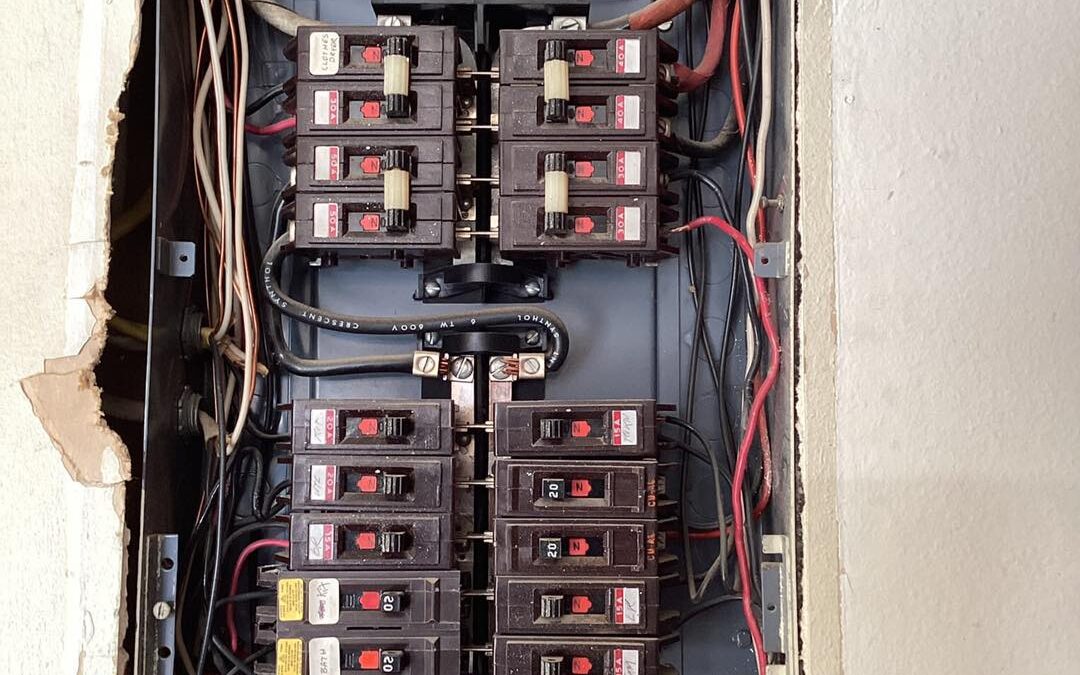
Electrical panel problems include loose wire connections at the breaker terminals. These loose connections create heat and resistance that make the breaker think there’s an overload. Rust or corrosion inside the panel also causes false trips.
Your panel might be undersized for your home’s current electrical needs. Older panels rated for 100 amps can’t handle modern appliances and electronics that draw more power. Burned bus bars or damaged panel internals require complete breaker panel replacement.
Never ignore a warm breaker or burning smells from your panel. These signs mean serious electrical panel problems that create fire risks.
According to the U.S. Fire Administration, electrical failures or malfunctions are a leading cause of residential house fires in the United States, with faulty wiring, overloaded circuits, and aging electrical panels among the most frequently cited contributing factors. Addressing recurring breaker trips promptly is one of the most effective ways homeowners can reduce this risk.
How to troubleshoot a breaker that keeps tripping
Finding the cause of a tripping breaker requires a step-by-step approach that helps you narrow down the problem safely. You need to identify which device or condition is creating the electrical issue.
Turn off and unplug devices on the circuit
Start by turning off all lights and appliances connected to the circuit that keeps tripping. This means flipping light switches to the off position and unplugging everything from the outlets on that circuit.
You need to create a clean slate before testing the breaker. Even devices in standby mode can draw power and contribute to the problem.
Make a mental note or write down which devices were plugged in. This list will help you identify the problem appliance later.
Pay special attention to high-power devices like space heaters, hair dryers, microwaves, and air conditioners. These appliances draw significant electricity and are common causes of overloaded circuits.
Reset the breaker safely
Locate your electrical panel and find the tripped breaker. A tripped breaker will be in the middle position or switched to the off position, depending on your panel type.
Push the breaker firmly to the off position first. Then switch it back to the on position until it clicks into place.
Never force a breaker that won’t reset. If the breaker trips immediately without any devices connected, you have a more serious problem that requires an electrician.
Stand to the side of the panel when resetting the breaker, not directly in front of it. Keep your face turned away as an extra safety measure.
Identify which appliance is causing the problem
Once the breaker stays on with everything unplugged, start reconnecting devices one at a time. Plug in one device, wait a few minutes, then plug in the next one.
Turn on each appliance and let it run for a minute or two before adding the next device. This process helps you identify exactly which appliance causes the breaker to trip.
If the breaker trips when you plug in or turn on a specific device, you’ve found your problem. That appliance may be faulty or drawing too much power for the circuit.
You might discover that the breaker trips only when multiple devices run at the same time. This indicates an overloaded circuit rather than a faulty appliance.
Check for warning signs like burning smells or warm outlets
Look for physical signs of electrical problems while troubleshooting. A burning smell near outlets, switches, or the breaker panel indicates dangerous overheating.
Feel the outlets with the back of your hand to check for warmth. Outlets should never feel hot or even noticeably warm to the touch.
Examine outlets and switch plates for discoloration, scorch marks, or melted plastic. These signs mean you need to stop using that outlet immediately and call an electrician.
Listen for buzzing or crackling sounds coming from outlets, switches, or the breaker panel. These noises suggest loose connections or arcing electricity, both of which are serious safety hazards that require professional repair. For persistent issues, the best electrical safety upgrades can address the root causes and prevent recurrence.
When a tripping breaker is dangerous
A breaker that keeps tripping can signal serious electrical problems that put your home and family at risk. Certain conditions create fire hazards or shock risks that require immediate attention from a licensed electrician.
Fire risks from electrical overloads
Electrical overloads happen when you draw more power through a circuit than it can safely handle. The wiring heats up as it struggles to carry excess current. If your breaker fails to trip or you keep resetting it without fixing the problem, the wires can get hot enough to melt their insulation.
This creates a serious fire hazard inside your walls where you cannot see it. Overheated wires can ignite nearby wood framing, insulation, or other building materials. The risk increases in older homes with outdated wiring that was never designed to handle modern electrical loads.
Common overload scenarios include:
- Multiple high-power appliances on one circuit
- Space heaters plugged into circuits already near capacity
- Extension cords daisy-chained together to power multiple devices
- Air conditioners running on circuits shared with other appliances
Your breaker exists to prevent these dangerous temperature increases. When it trips repeatedly on the same circuit, the overload condition persists and creates ongoing fire risk until you resolve it. In older homes, home rewiring services may be necessary to bring the system up to current safety standards.
Warning signs you should not ignore
Some symptoms indicate your electrical system has moved beyond a simple nuisance into dangerous territory. A burning smell near your breaker panel or outlets means insulation or components are overheating. This requires immediate action.
Scorch marks on outlets, switches, or the breaker panel itself show that dangerous arcing or overheating has already occurred. You may also notice outlets or switches that feel warm or hot to the touch.
Buzzing or crackling sounds from your breaker panel signal loose connections or failing components. These create heat and sparks that can ignite a fire. Flickering lights throughout your home suggest widespread electrical problems beyond a single circuit.
Your breaker should trip cleanly and stay off. If it feels loose, won’t stay in the reset position, or trips immediately every time, the breaker itself may be damaged or worn out. These are all signs you should not ignore when considering a residential electrical panel upgrade.
Why breakers should never be forced back on
Your breaker trips because it detected an unsafe electrical condition. Forcing it back on without identifying and fixing the problem exposes your home to the original hazard. Each time you reset a breaker that trips repeatedly, you allow dangerous current to flow through compromised wiring or faulty equipment.
Some people try to solve frequent tripping by replacing a breaker with one rated for higher amperage. This removes the safety protection without fixing the underlying issue. The wiring behind the breaker remains the same and cannot safely carry the increased load.
A breaker that trips immediately when you reset it indicates a short circuit or ground fault. These conditions create direct paths for electricity that bypass normal circuit resistance. The resulting current surge generates extreme heat in milliseconds.
You should never hold a breaker in the on position or tape it to prevent tripping. These actions disable your primary protection against electrical fires and shock hazards.
When to call a licensed electrician
Some breaker problems are straightforward, but others signal serious electrical hazards that require professional help. If your breaker trips immediately after resetting or shows other warning signs, it is time to contact a local residential electrician.
Breaker trips immediately after resetting
A breaker that trips the moment you flip it back on indicates a serious wiring problem. This immediate trip means there’s likely a short circuit or ground fault in your electrical system. The breaker detects dangerous electrical flow and shuts off power instantly to protect your home.
Don’t keep resetting a breaker that trips right away. Each reset puts stress on your electrical system and increases fire risk. The problem won’t fix itself, and repeated attempts can damage the breaker or worsen the underlying issue.
Short circuits happen when hot wires touch neutral wires or other hot wires. Ground faults occur when electricity flows through water, a person, or an unintended path to the ground. Both situations are dangerous and require immediate professional attention. In urgent cases, emergency electrical repair options are available when the problem cannot wait.
An electrician can trace the problem using specialized tools and repair faulty wiring safely. They’ll identify whether the issue is in your outlets, switches, or within your walls.
Breaker trips with no appliances running
When a breaker trips even though nothing is plugged in or turned on, you have a hidden electrical problem. This usually means damaged wiring inside your walls or a faulty breaker itself. Rodents can chew through wire insulation, or old wiring can deteriorate over time.
Moisture from leaks can also cause breakers to trip without any visible load. Water and electricity create ground faults that trigger your breaker’s safety mechanism. You might not see the damage, but it is actively threatening your home’s safety.
A licensed electrician can inspect your entire circuit to find the source. They use testing equipment to check wire integrity and locate damage you can’t see. Sometimes the breaker itself has worn out and needs replacement, which only a professional should handle.
You have an older electrical panel
Electrical panels older than 25 years may not meet modern safety standards. Panels from certain manufacturers like Federal Pacific Electric have known defects and don’t always trip when they should. This puts your home at serious risk.
Older homes often have 60-amp or 100-amp service, which isn’t enough for today’s electrical demands. Modern homes typically need 200-amp service to handle appliances, electronics, and HVAC systems safely.
An electrician can evaluate whether your panel needs replacement. They’ll check for signs of overheating, corrosion, or outdated components. Panel replacement is a major job that requires permits and professional installation. Understanding the signs you should not ignore for a residential electrical panel upgrade can help you act before a failure occurs.
You need new circuits or panel upgrades
Adding major appliances or home additions requires new dedicated circuits. Electric vehicle chargers, hot tubs, and workshop equipment draw significant power that your existing circuits can’t handle. Running these on regular circuits will cause constant tripping.
A licensed electrician will calculate your home’s electrical load and determine if your panel has capacity for additional circuits. If not, they’ll recommend a panel upgrade to support your needs safely.
New circuits require running wire through walls, installing new breakers, and ensuring everything meets NEC Article 210 requirements for branch circuit wiring. This work involves your main electrical panel, which carries lethal voltage. Only qualified electricians should perform this type of installation.
According to the U.S. Consumer Product Safety Commission, homeowners should have their electrical panels inspected by a licensed electrician if the system is more than 25 years old, if the home has undergone major renovations, or if circuit breakers are tripping frequently without a clear cause.
Conclusion
A breaker that trips once is doing exactly what it was designed to do. A breaker that trips repeatedly is telling you that the underlying condition hasn’t been resolved, and continuing to reset it without finding the cause is one of the most common ways minor electrical issues become serious hazards.
This guide has covered how breakers work, what drives the most common failures, how to troubleshoot safely, and which symptoms require a licensed electrician rather than a reset and a wait-and-see approach.
The line between a manageable overload and a dangerous short circuit or failing panel is not always obvious from the outside. Burning smells, warm outlets, immediate re-tripping, and breakers that won’t hold all indicate conditions that go beyond what a homeowner should handle alone. These are the moments where professional diagnosis protects both your home and the people in it. Staying proactive with electrical maintenance contracts can help catch developing problems before they reach this point.
Contact Peak Electric Group to schedule an inspection and get your electrical system evaluated by a licensed professional before a recurring breaker problem becomes a safety emergency.
Recent Comments